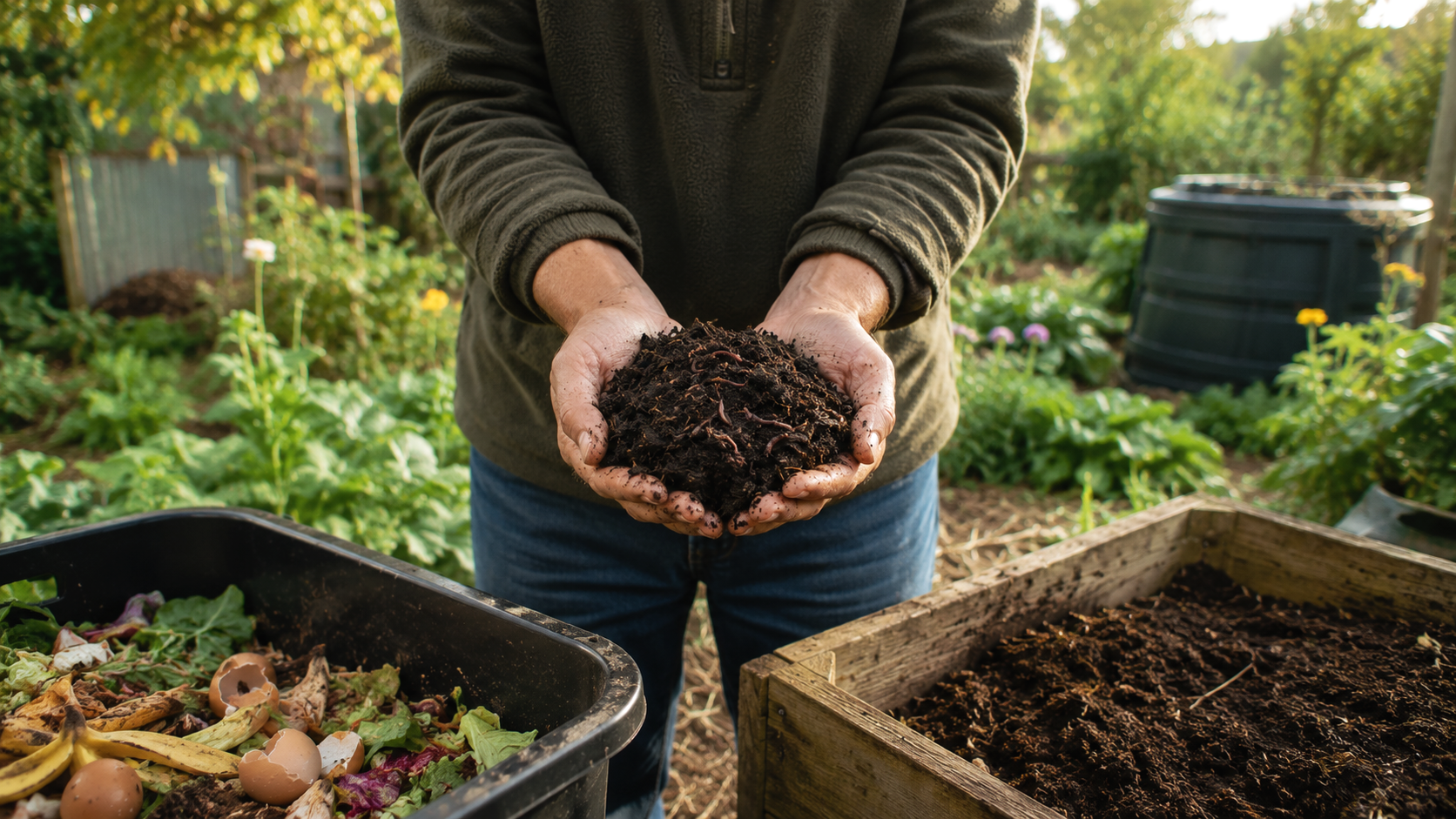
Spring is when your worms do their best work.
Ground temperatures are climbing. Start your worm farm now and you'll be harvesting your own castings by summer. Live composting worms, packed and couriered from Christchurch.
Your worms are packed by hand, one order at a time.
Every order is packed to order and sent on its way quickly — worms travel best when they aren't sitting around. They leave our Christchurch site in breathable packaging, bedded in our own worm castings.
✓ Harvested to order, not pulled off a shelf
✓ Bedded in worm castings for the journey, not packing filler
✓ Couriered nationwide — North and South Island
Spring Garden Kit: Feed the Soil Before You Plant
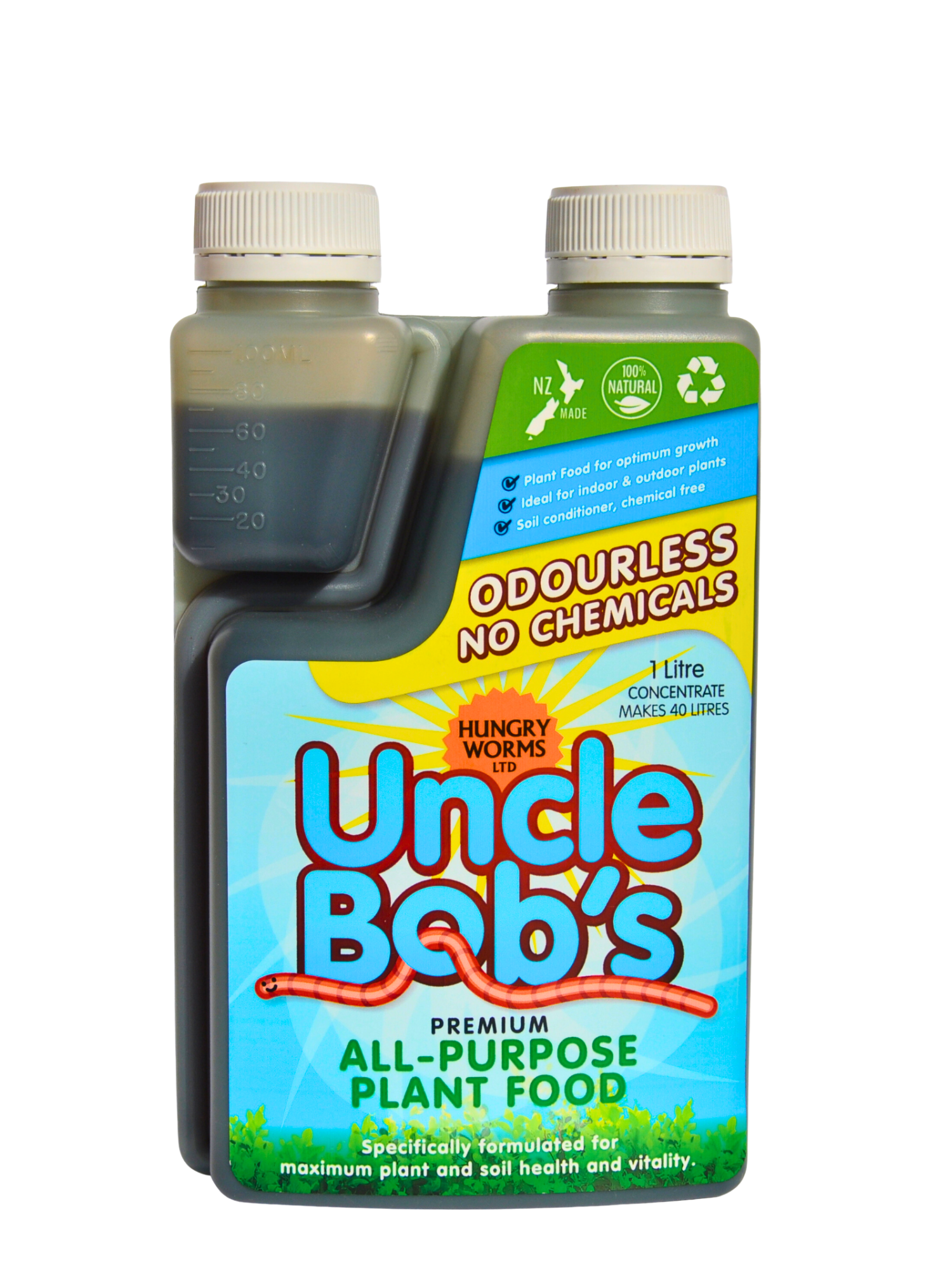
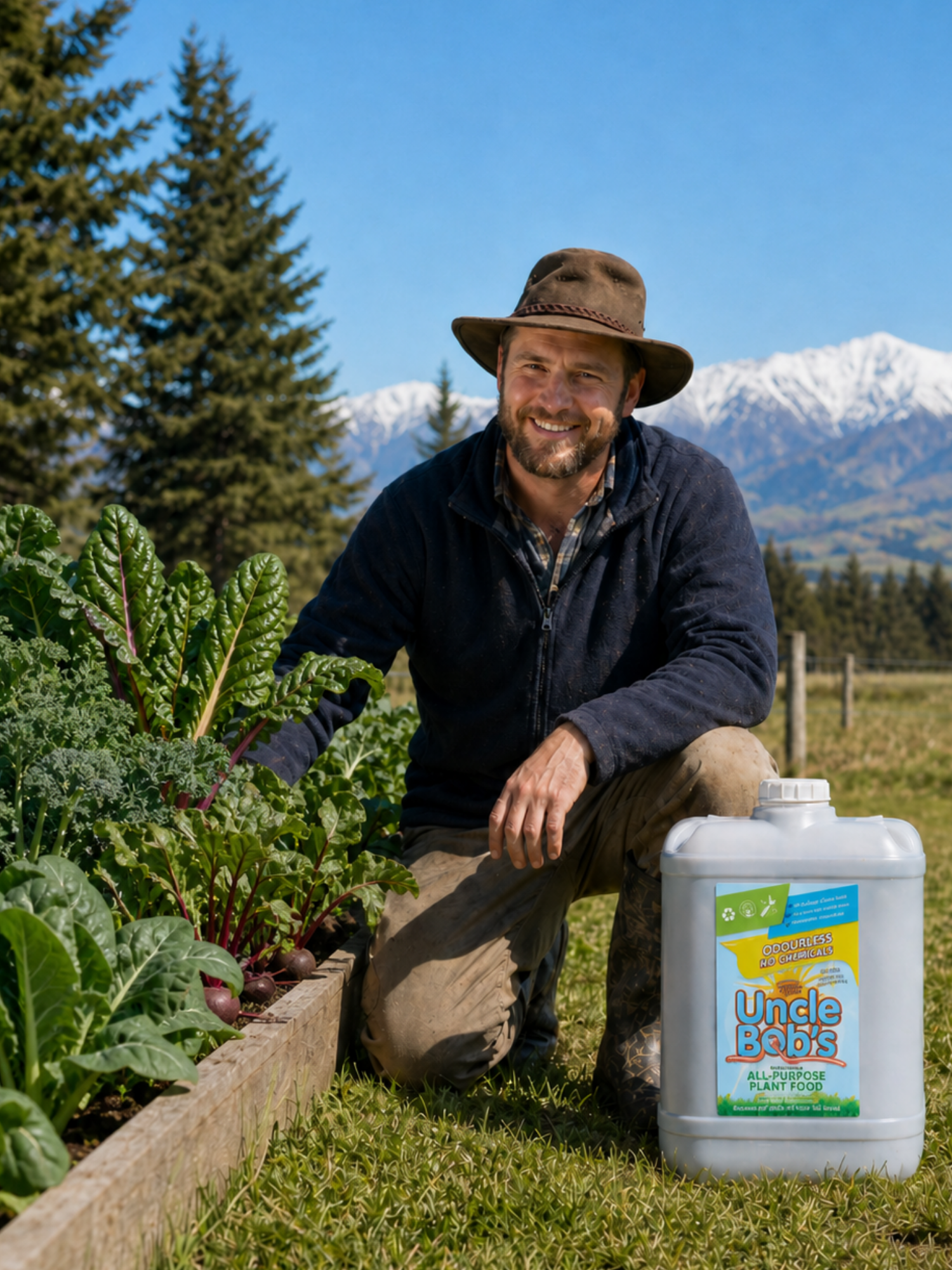
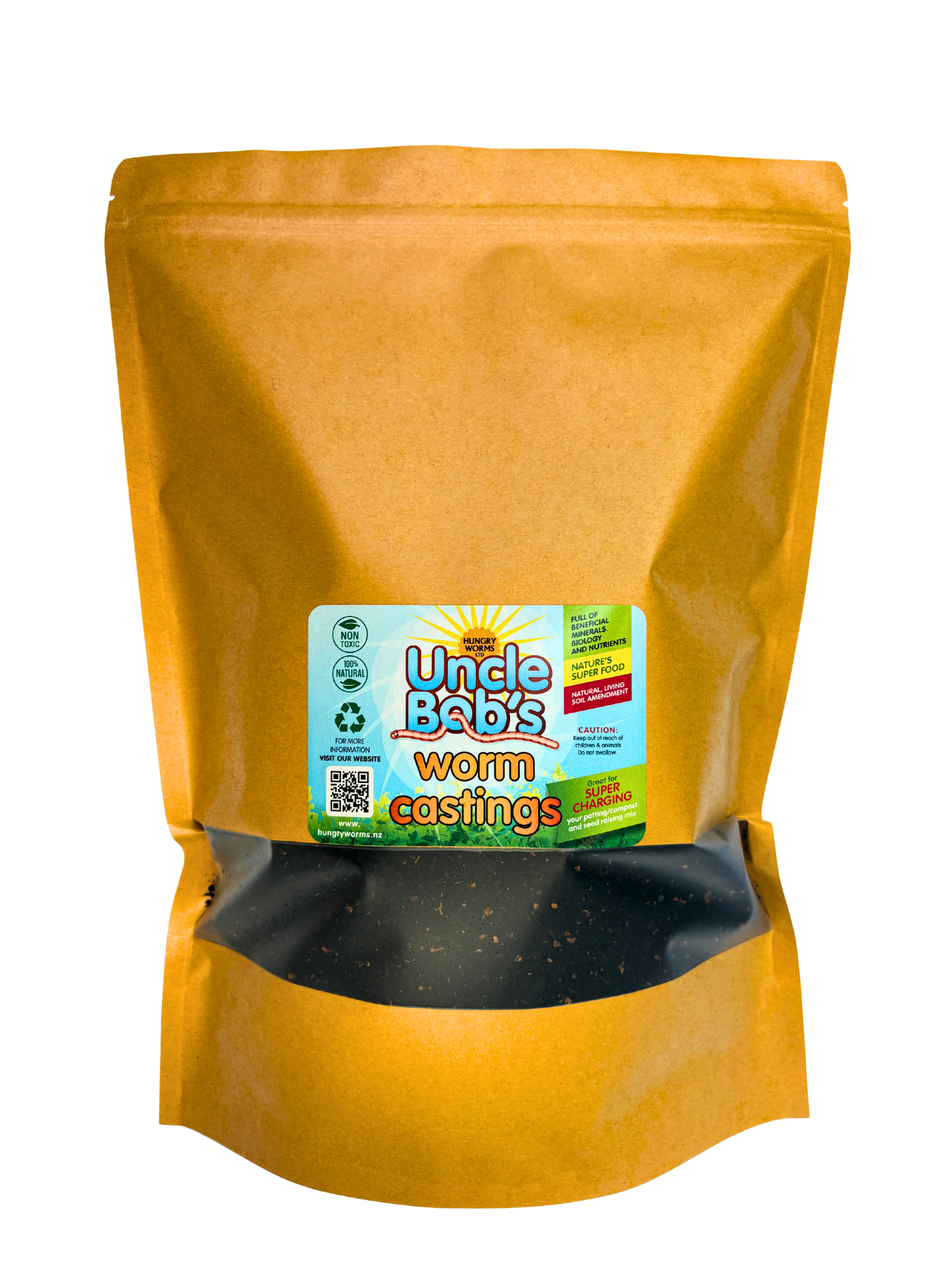
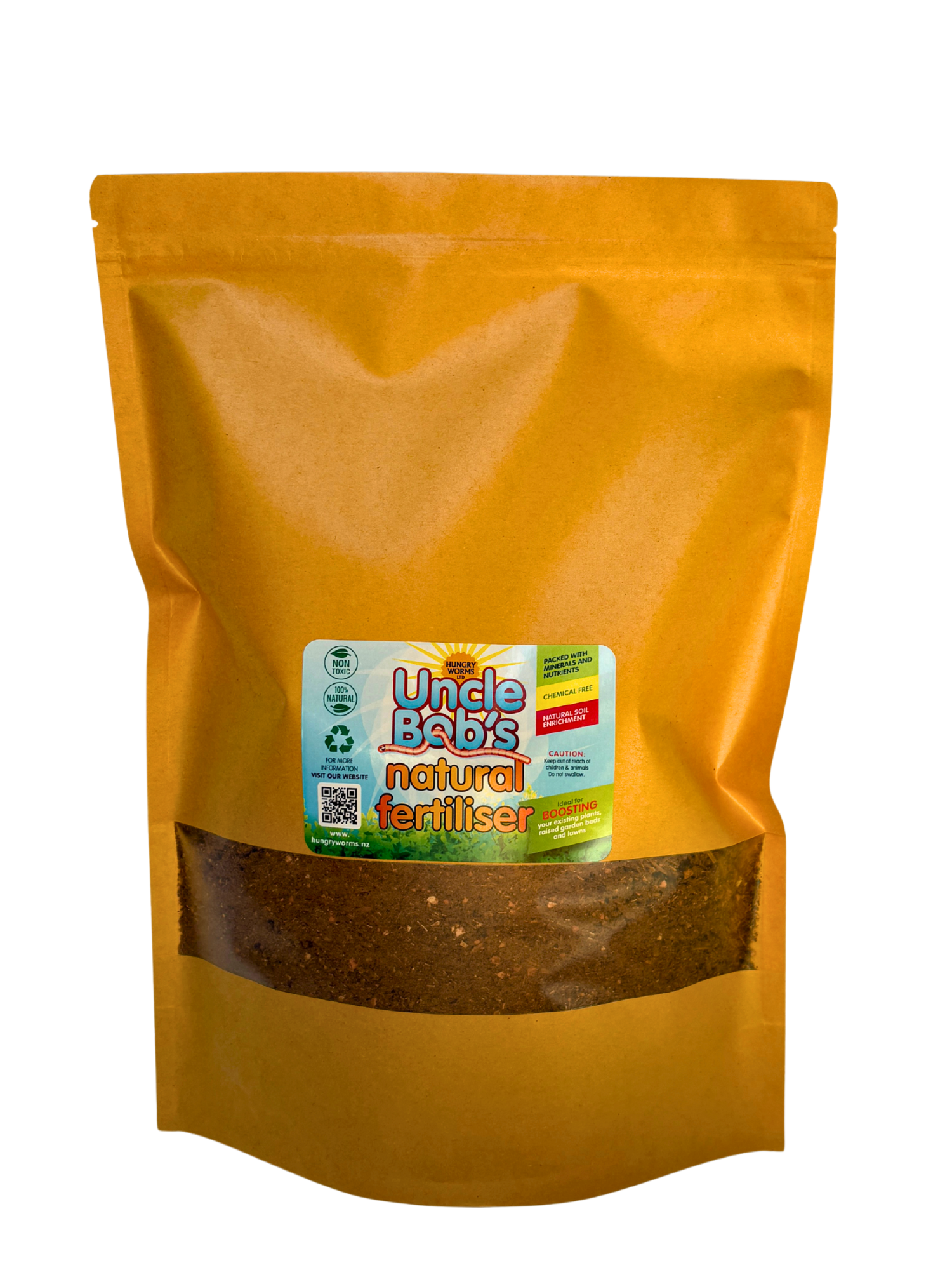
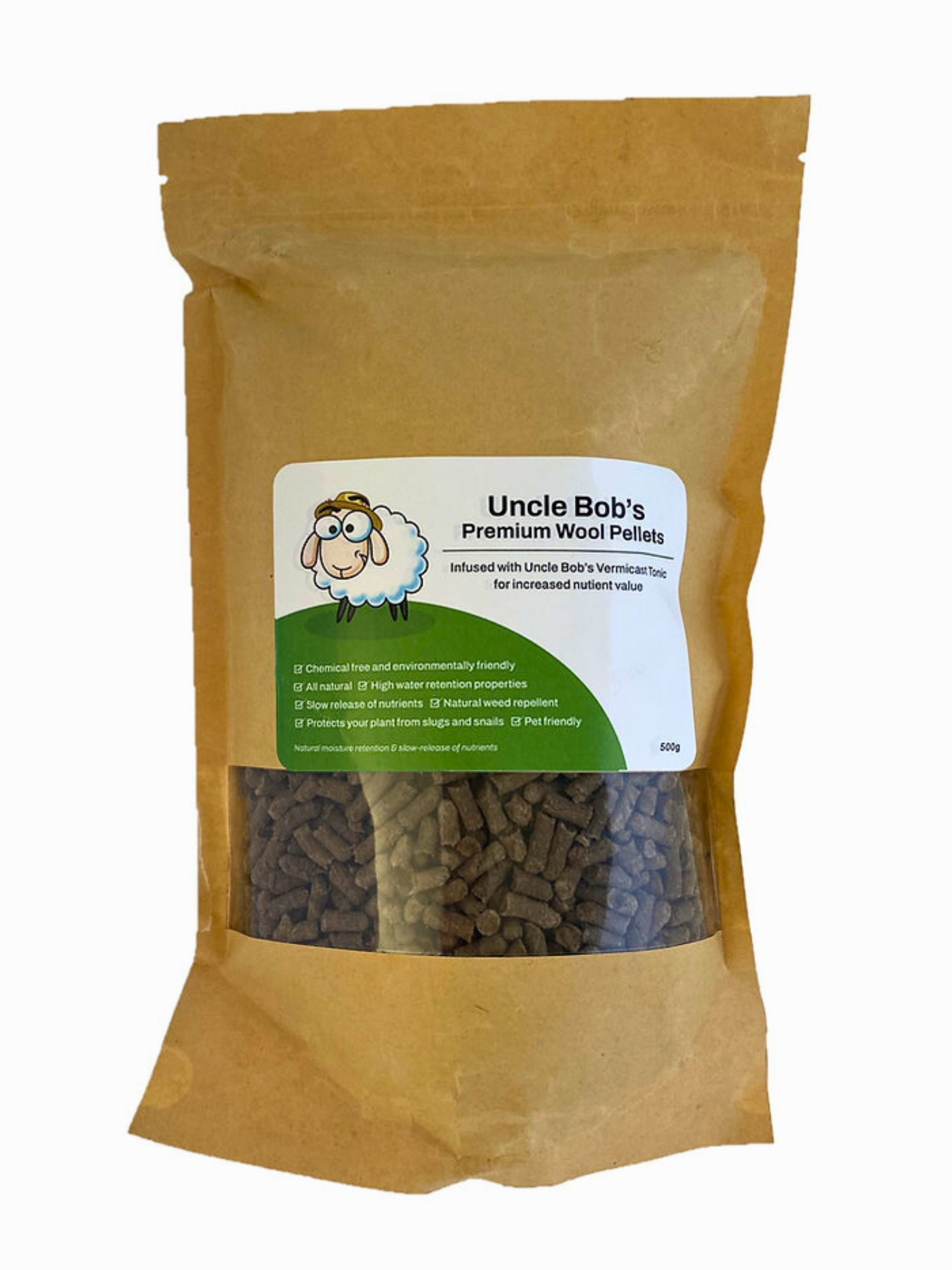

Welcome to Uncle Bob’s Regenerative Garden — your destination for truly sustainable gardening. We provide composting worms, premium natural plant food, worm castings, and eco-friendly gardening products that regenerate soil, nourish plants, and support a healthier planet — without the greenwashing.
Closing the loop, right here in New Zealand
Uncle Bob's is made by Hungry Worms — we collect food and green waste from some of New Zealand's best-loved places and turn it back into 100% natural, NZ‑made plant food and fertilisers. Waste becomes resource, resource grows real food, and together we take a step toward a more food‑secure New Zealand.
Proudly closing the loop with







Our Grass Looks Greener.
Two lawns, side by side. Same sunshine and same care — except one got a little help from Uncle Bob’s. Guess which one stayed lush and green — even without constant watering?
The Good Dirt
Worm farming & gardening tips from Uncle Bob



⏳ HOLIDAY SHIPPING NOTICE
We're currently away. You can order now, but this item will be packed and shipped from Monday 21 September. Thanks for your patience!
Our premium composting worms are nature's recyclers, turning your food scraps into nutrient-rich vermicast — often called black gold by gardeners. Vermicast doesn't just feed your plants; it regenerates soil, boosts microbial activity, and improves water retention, so your garden copes better with both dry spells and heavy rain.
Sent live from Christchurch, right across New Zealand. Dispatched early in the week · South Island $20 · North Island $25 · Free pickup in Christchurch · Same delivery charge whether you order one pack or six.
Dispatched early in the week · South Island $20 · North Island $25 · Free pickup in Christchurch · Same delivery charge whether you order one pack or six · They arrive alive, or we replace them.
What you get
Every order is weighed, so you get exactly what you paid for.
250g of live worms — approximately 1,000 worms. Weighed without bedding, so the weight is worms, not packing material.
Packed in their own premium worm castings, not generic straw or coir. They travel in the material they already live in, which keeps them settled and cushions them in transit.
A range of ages and sizes, so the population starts building from day one rather than waiting for a single generation to mature.
How many packs do I need?
The most common question we get, and the honest answer depends on what you're setting up. Worms come in 250g packs, so a bigger job is simply a matter of ordering more than one.
Starting a standard home worm farm — a Hungry Bin, Worm Café, tumbler, or converted bathtub → 1 pack. A thousand worms is a proper start for a household bin, and the population builds from there.
Getting to full capacity faster, or running a large bin or two farms → 2 packs. You'll be processing a full household's scraps in weeks rather than months.
Restocking after a population crash — a hot summer, a sodden winter, or an accidental overfeed → 2 packs. Enough to rebuild a breeding population instead of limping along.
In-ground systems, worm towers, or a garden-bed setup → 2 to 4 packs, depending on the volume of the bed.
Seeding a worm-based wastewater system → 4 to 8 packs, and often more when commissioning a new system. This is a different job from a kitchen worm farm, and we've written a full guide to it here. If you're unsure, get in touch and we'll work it out with you.
Worth knowing before you choose: our delivery charge is the same whether you order one pack or six. On a single pack to the North Island, postage works out at $25 a pack. On four packs, it's $6.25 a pack. If you've been meaning to start a second farm — or you know a neighbour, a school, or a community garden who wants worms too — ordering together is the cheapest way for everyone to get them.
Delivery
What it costs. Flat rate, no matter how many packs you order. All prices include GST.
South Island, standard address — $20
South Island, rural (RD) address — $22
North Island, standard address — $25
North Island, rural (RD) address — $31
Pickup in Christchurch — free
There's no minimum order and no free-shipping threshold; these are the rates on every order.
When we send. Worms are packed and sent in the morning, early in the week — most orders leave us on a Monday or Tuesday. We don't send live worms late in the week, so no box sits in a depot over a weekend. Orders are usually on their way within one working day.
How long it takes, counting from dispatch:
South Island — 1 to 2 working days
North Island — 2 to 3 working days
Rural (RD) addresses — allow an extra day or two
Across our recent orders the average is 2 days in transit, and about 3 days door to door once packing is counted.
We send with Aramex, and you'll get a tracking number so you know when to expect the box.
We've sent worms to gardeners in every region from Southland to Auckland — Otago, Canterbury, Nelson, Wellington, Manawatū-Whanganui, Hawke's Bay, Bay of Plenty and Waikato included.
If they don't arrive in good condition
We've been sending worms all over New Zealand for years and we've never had a pack arrive dead. But they're living animals in a box, so here's what happens if yours are the first.
Email us at info@unclebobs.co.nz within two days of delivery with your order number and a photo of the worms as they arrived, and we'll replace them at our cost — or refund you, if you'd rather. You don't need to send anything back to us.
In Christchurch? Come and collect.
Pickup is free, and it's how a good share of our local customers order — more than a quarter of all orders are collected rather than couriered. You save the postage entirely, and your worms spend no time in a courier van at all.
Collection is from Northwood. We're flexible on timing — most days and most hours work — and we'll sort out the details with you once you've ordered. If it suits you better, we can leave your order out for a contactless pickup.
Settling them in
Worms aren't difficult, but they do have preferences. Get these four right and the rest looks after itself.
Moist, but free-draining. Damp like a wrung-out sponge. Standing water is the most common way people lose a new bin.
15–25°C. Out of direct sun in summer, sheltered in winter. A shaded spot works well through a Canterbury summer.
Dark and covered. Worms move away from light. A damp sheet of cardboard or hessian over the surface keeps them working right up to the top of the bin.
Feed lightly at first. For the first two to three weeks, add a small amount and wait until it's mostly gone before adding more. New farms are far more often overfed than underfed.
They like: fruit and vegetable scraps, coffee grounds and paper filters, tea leaves, crushed eggshells, and torn-up cardboard or plain paper mixed through.
Go easy on: citrus, onion and garlic in quantity, and bread or pasta.
Keep out: meat, fish, dairy, and oily or heavily salted food.
Where our worms come from
We're a regenerative business without the greenwashing. The food waste our worms process is collected from Christchurch businesses, and the finished castings go back out to local gardens and to retailers here in the city — the whole loop closed inside one place. When you buy a pack of worms from us, you're buying from that system, not from a wholesaler's holding tank.
Questions we get asked
Will they survive the courier? They travel in their own castings, which cushions them and buffers temperature swings, and we send early in the week so nothing sits in a depot over a weekend. Most boxes are with their new owner within two to three days of leaving us. And if a pack ever does arrive in poor condition, we replace it at our cost — see above.
Do I need to feed them the day they arrive? No. Settle them into their bedding, cover the bin, and leave them a day before the first small feed.
Will 1,000 worms handle all my kitchen scraps straight away? Not immediately. A new farm takes a few weeks to find its rhythm while the population settles and builds. If you want to be processing a full household's scraps sooner, start with 2 packs.
Can I put these in my septic tank? Not into a conventional septic tank — worms can't survive in one. They're used in worm-based wastewater systems, which are a different thing entirely. We've explained the difference here.
Do you deliver rural? Yes, anywhere in New Zealand. Rural delivery is $22 in the South Island and $31 in the North Island. Allow an extra day or two.
Is it cheaper to order more than one pack? Per pack, yes — the delivery charge doesn't change with the number of packs. Four packs cost the same to send as one.
Can I collect instead of paying postage? Yes. Pickup in Christchurch is free and we're flexible about when.
Healthy worms. Healthy soil. Healthy plants!