Your Worms Feel the Chill Too: 7 Simple Ways to Keep Your Composting Crew Thriving This Kiwi Autumn
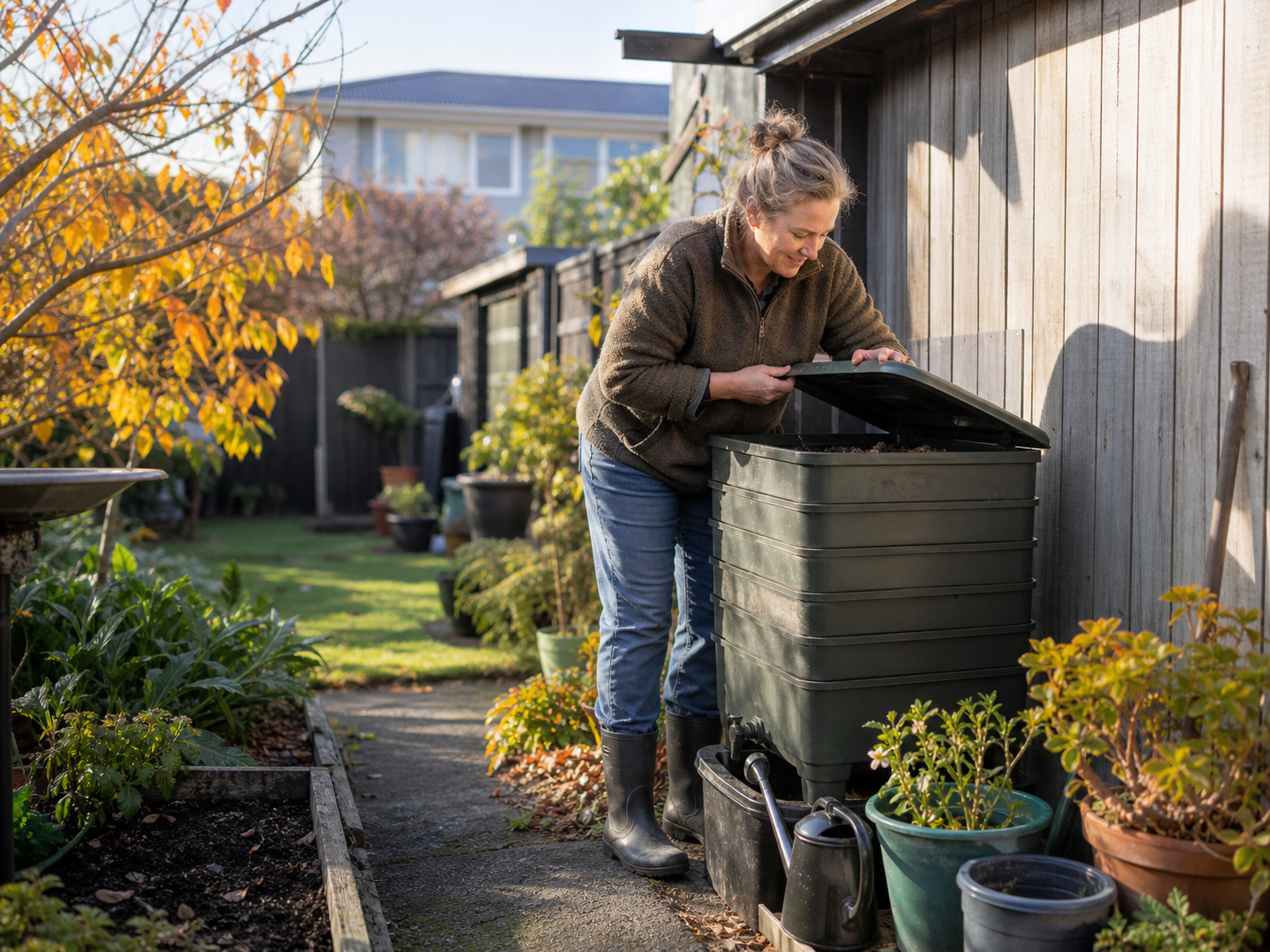
The leaves are turning, the mornings are crisp, and somewhere in the back garden your hard-working composting worms are quietly sending you a memo: "Hey mate, things are getting a bit nippy down here."
Autumn in Aotearoa is a beautiful season, but it's also the time of year when worm farms most often go off the rails. Composting worms (Eisenia fetida — the cheerful red wigglers we call Tiger Worms) are happiest between 15°C and 25°C. Once temperatures dip below 10°C, they slow right down. Below 5°C, they stop eating altogether — and a soggy, neglected bin in a cold corner can quickly turn into a worm graveyard by July.
The good news? A few small autumn habits will keep your worms warm, fed just-right, and ready to power through to spring. Here are seven simple things to do over the next few weeks.
1. Move the farm to a warmer, sheltered spot
If your worm farm has been happily living under a shady tree all summer, autumn is the time for a relocation. Pop it somewhere that catches the morning sun but stays sheltered from southerly winds and heavy rain — the north or east side of a shed, garage, or fence works beautifully. In colder regions like Otago, Southland, or the central North Island, consider moving the bin into a garage, carport, or laundry. Worms don't need light, but they really do need stable temperatures.
2. Insulate, insulate, insulate
Think of your worm farm like a chilly bin in reverse — you want to hold the warmth in. A few easy options:
Wrap the outside in old hessian sacks, a wool blanket, or a piece of carpet underlay.
Lay a folded woollen blanket or thick layer of damp newspaper directly on top of the bedding (under the lid).
For wooden farms, a layer of cardboard around the outside adds great insulation.
Whatever you use, keep it breathable. Plastic wrap traps moisture and suffocates the worms.
3. Feed less, and feed smarter
Worms eat roughly half as much in autumn as they do in summer. Overfeeding is the number one cause of cold-weather worm farm problems — uneaten food rots, attracts pests, and drops the pH. A good rule of thumb: only add new food once the previous lot has nearly disappeared. Small, chopped-up scraps break down faster and are easier for sluggish worms to handle.
4. Skip the cold-weather troublemakers
Some foods that worms tolerate in summer become real problems in autumn:
Citrus, onion, and garlic — too acidic, and breakdown slows in the cold.
Large amounts of pumpkin or kūmara skins — lovely, but slow to process.
Bread and pasta — go mouldy fast in damp, cool conditions.
Stick to soft greens, coffee grounds, crushed eggshells, banana skins, and aged veggie scraps. Your worms will thank you.
5. Bulk up the bedding
Autumn is the perfect time to add a generous layer of fresh "browns" — carbon-rich bedding that warms the bin as it breaks down and soaks up excess moisture from autumn rains. Shredded cardboard, ripped-up egg cartons, untreated sawdust, dry autumn leaves, and shredded newspaper all work brilliantly. Aim for a fluffy 5–10 cm layer over the top of any new food.
6. Watch the moisture
Autumn rain plus reduced evaporation can quickly turn a worm farm into a swamp. A healthy bin should feel like a wrung-out sponge — moist, but no free water at the bottom. Check the leachate tap weekly and drain it. If things are looking soggy, mix in extra dry bedding straight away. If you're somewhere especially wet (looking at you, West Coast and Bay of Plenty), make sure the lid is on properly and the farm is angled slightly so rain runs off.
7. Harvest your castings before winter sets in
Late autumn is a brilliant time to collect a final batch of worm castings before the worms go quiet for winter. Use the migration method: stop feeding one side of the farm for two weeks, add fresh food and bedding to the other side, and most worms will move across — leaving you with rich, dark vermicast to spread on the garden, mix into seed-raising mix, or store for spring. It's the perfect autumn reward for a season of good worm parenting.
A final word from Uncle Bob
Worms are surprisingly tough little creatures, but they're not magic. A few minutes of care now — a warmer spot, a cosy blanket, a bit less food, a bit more bedding — will see your composting crew through the chilly months in great shape. Come spring, you'll have a thriving farm ready to munch through the season's scraps and reward you with some of the best fertiliser money can buy.
Got questions about your worm farm this autumn? We're always happy to help — flick us a message or pop into unclebobs.co.nz for more tips, products, and worm wisdom.
Happy worm farming, and stay warm out there.
